
Dawson County Court Records After Arrest
A Dawson County jail arrest and a Dawson County court record are related, but they are not the same record. The booking record is created when the person enters Dawson County Jail or another lawful holding point. The court record begins after a prosecutor files a complaint, information, indictment, or another charging instrument in the correct court. The charge listed at booking may be preliminary. Prosecutors may accept the charge, decline it, amend the wording, reduce it, add counts, or present a felony to a grand jury.
For custody, bond confirmation, and local booking records, use the Dawson County jail inmate records route. For booking photos, use the Dawson County jail mugshots record path. The court-record search is for filed charges, case numbers, hearings, dispositions, warrants in the case file, and clerk-maintained documents. Certified court papers come from the clerk of the court, not the jail.
Find Court Records After Arrest
The main online starting point is re:SearchTX, the statewide portal for participating Texas courts. Coverage can depend on the court and case type, and detailed access may require an account or login. If a Dawson County case is not visible there, use the county office that handles the case type. The District Clerk is the official record contact for district-court and felony matters. The County Clerk handles county-level records where assigned. The Justice of the Peace handles local JP or magistrate matters, including some Class C and warrant-related issues.
- Gather the arrest date, booking date, arresting agency, defendant name, date of birth if known, and any paperwork from jail or court.
- Search re:SearchTX by party name or case number, then narrow by court, location, date range, and case type if those filters are available.
- If no case appears, contact the Dawson County District Clerk, Dawson County County Clerk, or Justice of the Peace based on the charge level.
- Use Texas DPS Conviction Name Search for statewide conviction history, not for real-time jail custody or brand-new filings.
The re:SearchTX case-search portal is the court-search screen documented in the Dawson research.
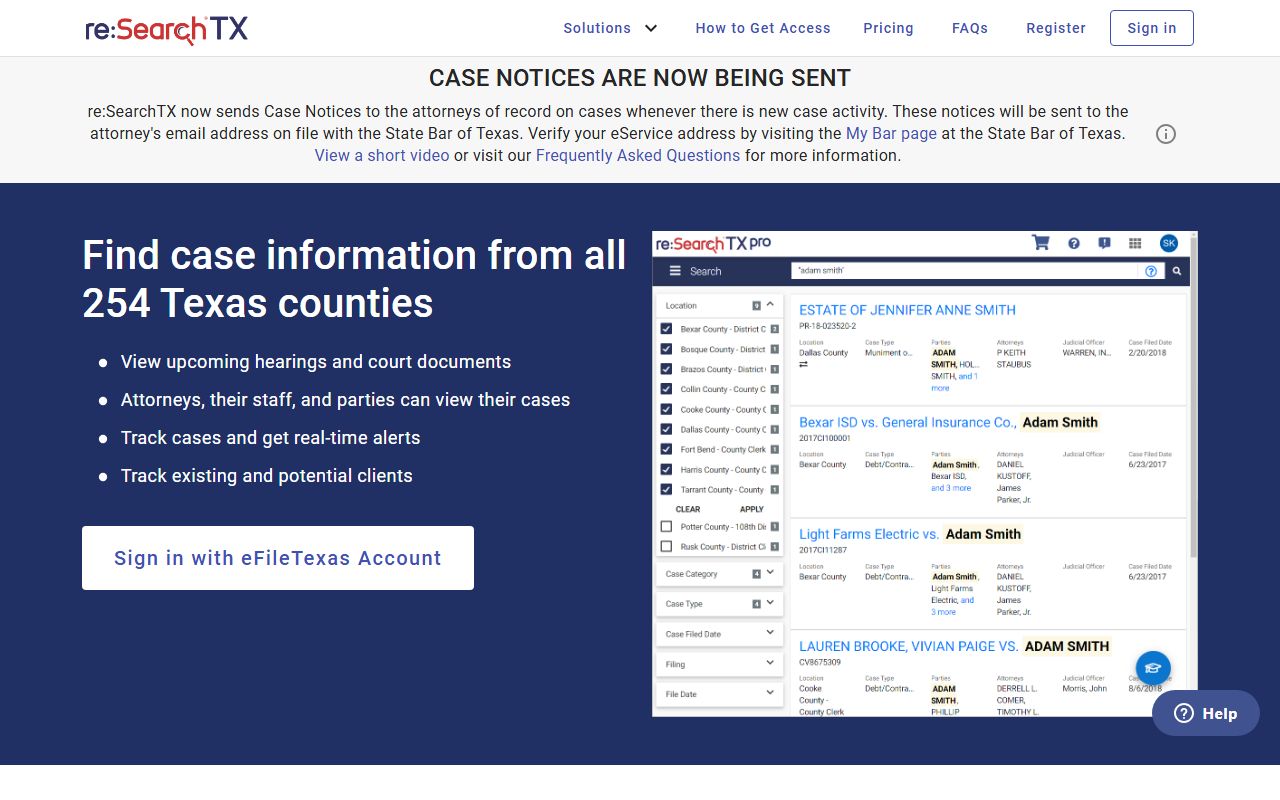
Use that portal with clerk contact because a new arrest may precede a visible court filing by hours or days.
Dawson County Court Search Fields
Research found a re:SearchTX field set, but not a separate Dawson County criminal-case portal with a county-only form. Search fields should be treated as a tool for locating the court case, not as proof that every Dawson County case is online. Clerk confirmation remains important when the case is recent, sealed, not yet filed, or outside the participating portal coverage.
| Field Label | Type | Required | Options and Notes |
|---|---|---|---|
| Case Number | Text | Optional | Best when known from court paperwork or clerk correspondence. |
| Party Name | Text | Optional | Search by defendant or party name; spelling matters. |
| Court or Location | Filter | Optional | Coverage depends on participating courts. |
| Date Filed or Date Range | Date filter | Optional | Useful when the arrest date is known but the case number is not. |
| Case Type | Filter | Optional | Criminal, civil, family, and probate filters may vary by interface. |
| Search | Button | Required after criteria | Detailed results may require login. |
Dawson County Charging Documents
Court records after a jail arrest turn on the charging document. In Texas, the document may be a complaint, information, indictment, or related filing. A complaint is a sworn accusation or supporting charging document. An information is filed by a prosecutor and is often used in misdemeanor matters and some waived felony settings. An indictment is a grand-jury accusation in a felony case. The correct document depends on the charge, court, and procedural stage.
| Document | Common Role | What to Check |
|---|---|---|
| Complaint | Sworn accusation or support for a charge. | Name, date, allegation, arrest agency, and court assignment. |
| Information | Prosecutor-filed charge in many misdemeanor or eligible settings. | Filed charge, count wording, offense level, and prosecutor signature. |
| Indictment | Grand-jury felony accusation. | Count list, offense language, cause number, and filing date. |
Dawson County Charge Status
A Dawson County arrest charge can change after the prosecutor reviews the report, evidence, criminal history, victim information, and court requirements. A charge that began as one booking description may be filed under a different statute, reduced, amended, dismissed, or presented to a grand jury. The court record is the better source for the filed charge. The jail may still have useful custody and bond information, but it cannot certify the final court disposition.
| Status | What It Means |
|---|---|
| Pending | The charge has been filed and has not reached final disposition. |
| Amended | The prosecutor changed charge wording, count details, or legal theory. |
| Reduced | The filed or final charge is lower than the original arrest charge. |
| Dismissed | The court or prosecutor ended the charge without conviction. |
| Disposition | The final result, such as guilty, dismissed, deferred, acquitted, or other judgment. |
Bond After Dawson County Arrest
Texas Code of Criminal Procedure Article 15.17 requires an arrested person to be taken before a magistrate without unnecessary delay and not later than 48 hours after arrest. Texas Code of Criminal Procedure Chapter 17, including Article 17.15, sets bail rules. Bail should give reasonable assurance of appearance, should not be used as an instrument of oppression, and must account for the offense, ability to make bail, and public safety concerns. Dawson County did not publish an official online bond-payment page or accepted-payment list in the research.
| Bond Type | How It Works |
|---|---|
| Cash bond | The full cash amount is posted with the proper authority. |
| Surety bond | A licensed bail bond company posts bond for a fee and assumes the obligation. |
| Personal or PR bond | Release is based on written promise and court conditions, when authorized. |
| Property bond | Property is pledged where allowed and accepted by the court. |
| No-bond hold | Release is not available on that hold until court action or another agency clears it. |
Call Dawson County Jail at 806-872-7560 before trying to post bond. Confirm the current amount, bond type, payment authority, accepted method, and whether a TDCJ parole hold, federal hold, ICE detainer, out-of-county warrant, or no-bond order blocks release.
Dawson County Arrest Warrants
No official Dawson County active-warrant search page, most-wanted list, or searchable sheriff warrant roster was located. Warrant questions should be handled through the sheriff, the issuing court, re:SearchTX where records are public, or an attorney. A person with an active warrant can be arrested if they appear in person, so warrant-clearing steps should be planned carefully. Bench warrants may originate from the court that issued them, while arrest warrants authorize arrest based on probable cause. Search warrants are different; they authorize a search of a place or item and are not the same as a public arrest list.
- Arrest warrant
- A court order authorizing arrest based on probable cause.
- Bench warrant
- A judge-issued warrant, often for failure to appear or violation of court order.
- Fugitive hold
- A hold showing another jurisdiction seeks pickup or custody.
- Magistrate warning
- The Article 15.17 appearance where rights and bail may be addressed.
Dawson County Charges vs Convictions
A charge is an accusation in the court record. A conviction is a final result after plea, trial, or other judgment that supports a finding of guilt. The difference is important for court records after a jail arrest because the public may see a booking charge before the case is resolved. DPS conviction history is not a live jail roster and is not the same as every pending court filing.
| Point | Charge | Conviction |
|---|---|---|
| Stage | Accusation or filed count. | Final judgment, plea, or verdict. |
| Proof level | Depends on charging stage and probable cause. | Requires legal resolution such as plea or verdict. |
| Where shown | Jail paperwork and court case records. | Court disposition and statewide conviction-history tools. |
The Texas DPS Conviction Name Search is a statewide conviction-history portal, not the place to confirm a brand-new Dawson County jail arrest.
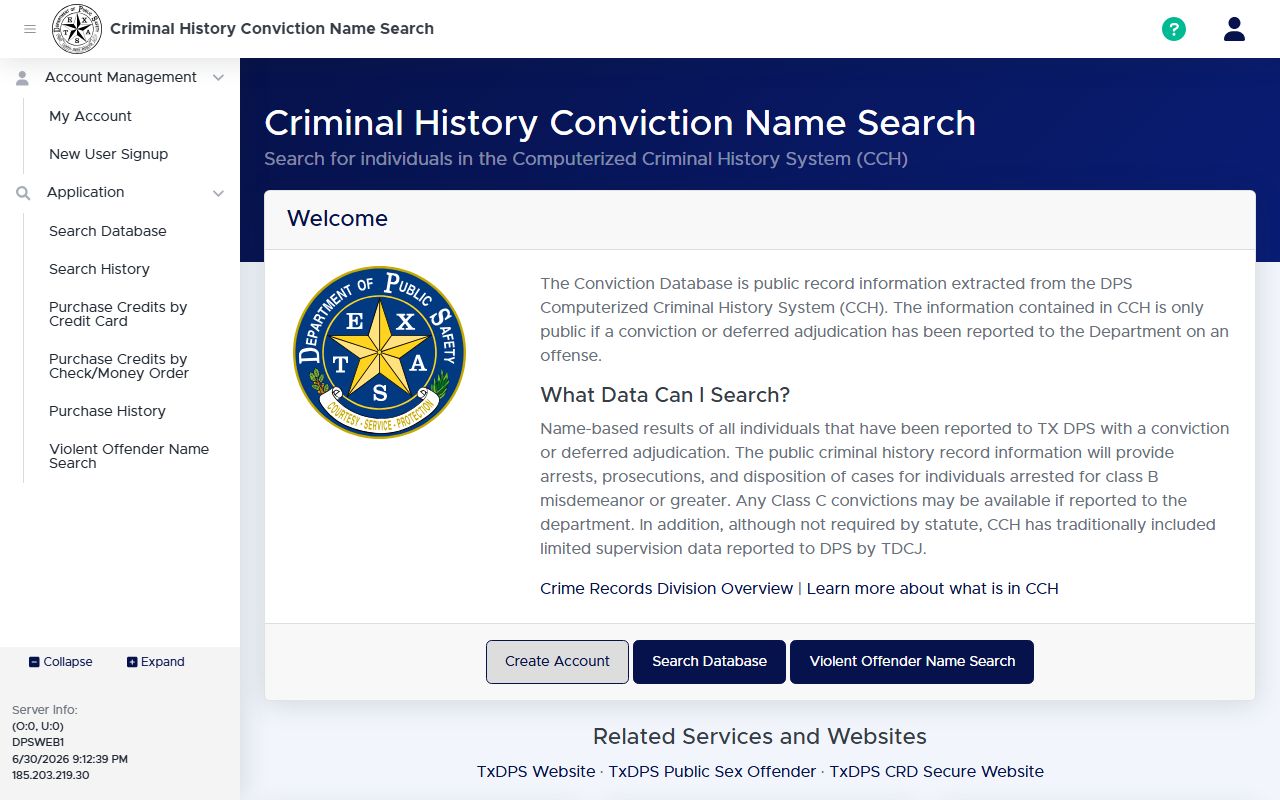
DPS results are most useful after disposition, while recent court filings still need re:SearchTX and Dawson County clerk channels.
Dawson County Sealed Records
Some court records after an arrest may be restricted by expunction, nondisclosure, juvenile confidentiality, law-enforcement exceptions, or court order. Texas Code of Criminal Procedure Chapter 55A covers expunction for qualifying arrest and criminal records. The Texas State Law Library provides criminal-records guides and forms for public legal information. A dismissed charge is not automatically erased from every database. Eligibility depends on the case result, timing, offense type, and court order.
| Point | Sealed or Nondisclosed | Expunged |
|---|---|---|
| Public visibility | Limited from public disclosure by order or rule. | Removed or treated under expunction rules when granted. |
| Agency access | Some justice agencies may retain limited access. | Access is much more restricted after a valid order. |
| Public action | Use the court process and provide the signed order where required. | Use Chapter 55A procedures and clerk/court guidance. |
Dawson County Restricted Court Records
Texas Government Code Chapter 552 gives the public a way to request government records, but it also includes exceptions. Section 552.108 can matter for pending criminal investigations and law-enforcement records. Juvenile records, sealed matters, expunged records, confidential victim information, and active investigative material may be withheld or limited. The clerk can explain what office holds a record and whether certified copies are available. Legal advice about eligibility, strategy, or record clearing should come from an attorney.
Important: Court and jail data may not be used for credit, employment, tenant screening, insurance, or any other FCRA-covered purpose.